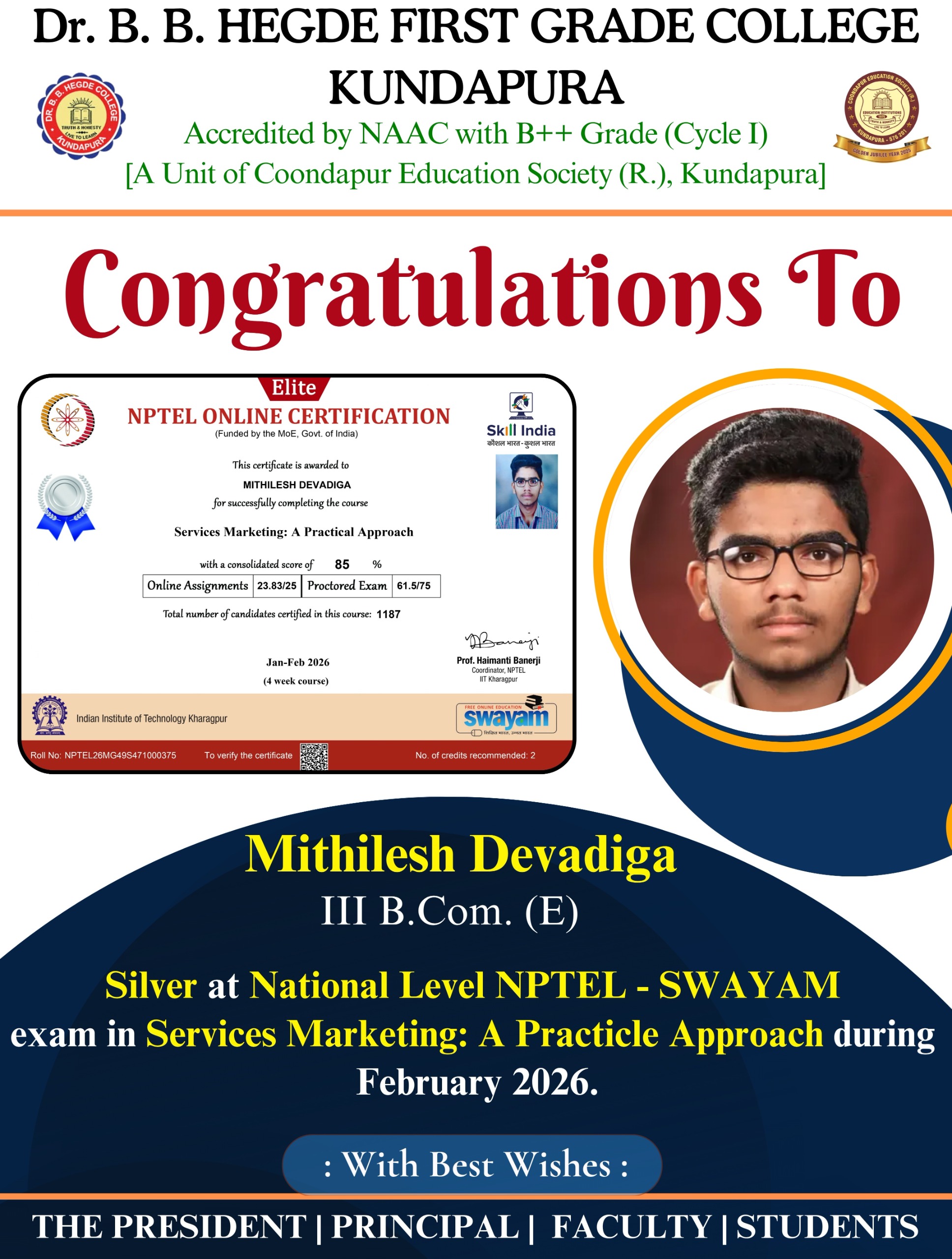
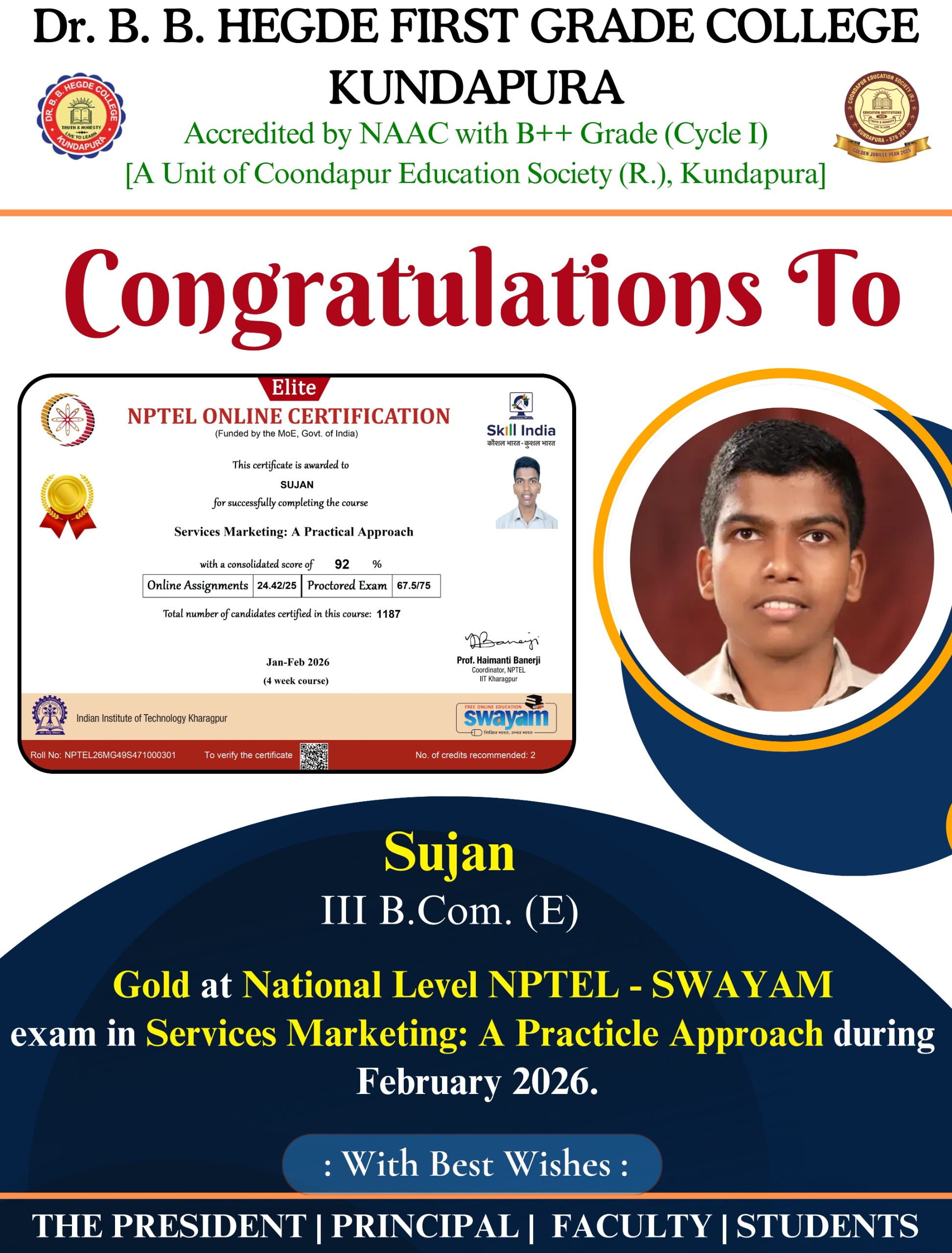
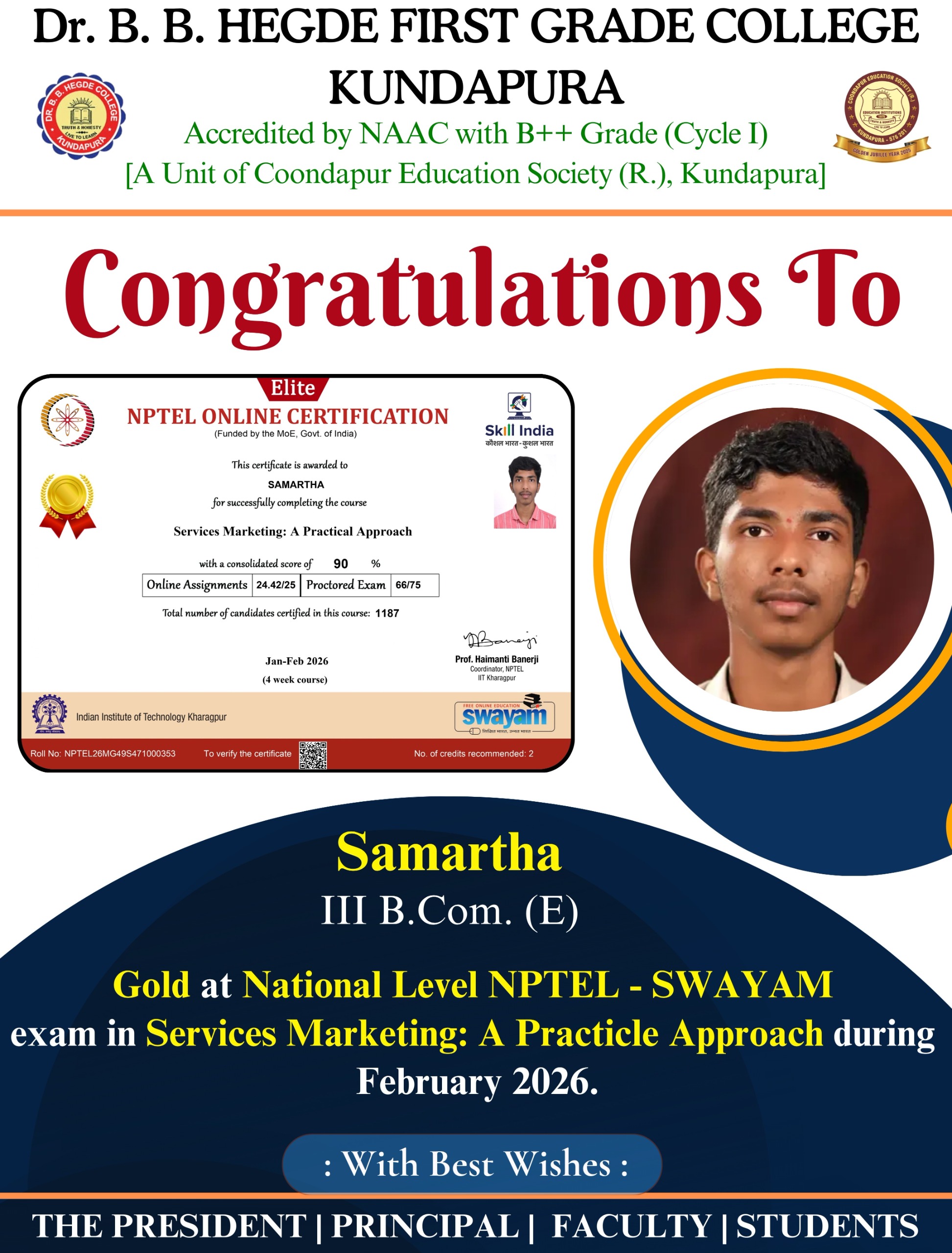
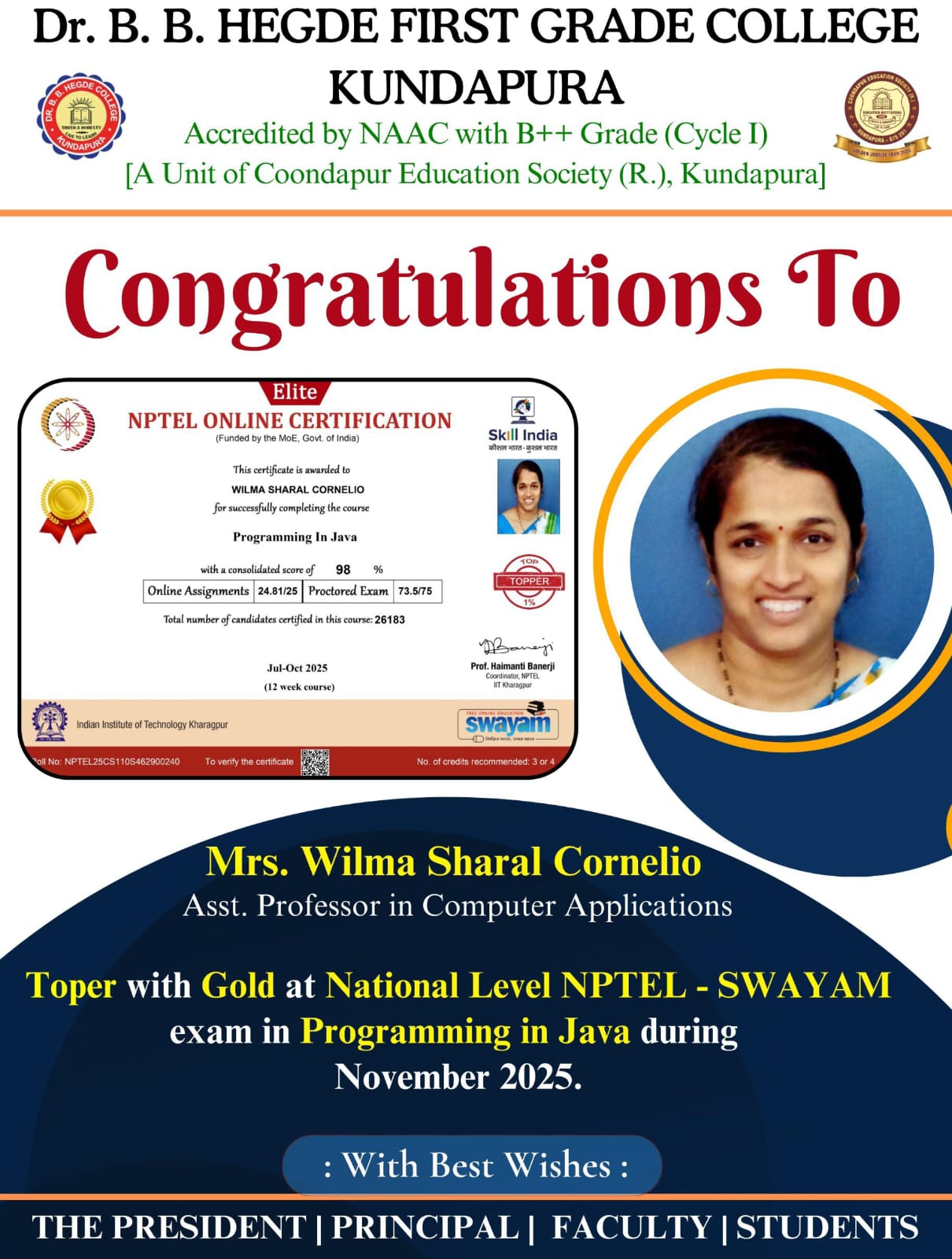
SWAYAM-NPTEL courses
NPTEL is a project of 7 older lITs and IISc. Today, NPTEL is a National Coordinator for Engineering courses (UG and PG) under SWAYAM, the National MOOCs portal. The USP of NPTEL courses is that they are offered by the best faculty in the IITs/IISc/IISERs/IIITs in each subject. The content is very current as the faculty also carry out research in these areas.
NPTEL also offers courses in Humanities and Management subjects as the NPTEL partner institutes also have these departments.
NPTEL courses are for a duration of 4/8/12 weeks and each week has the following components:
Video content of about 2.5 to 3.5 hrs per week
Additional reading material - text transcripts, reference documents, journal papers
An assignment that tests the learning of the student on the weekly content
Discussion forum for the users to ask questions and clarify doubts that may arise - the communication channel between the Course instructor and the learners
A live interaction session between the Instructor and the learners
The courses we offer are offer UG/PG/PhD level and the guidelines given here are applicable to students of any degree programme.
Calculating Learner Effort in SWAYAM-NPTEL MOOCs
Learner engagement per week is estimated as follows:
Minimum effort required:
Table 1: Calculation for minimum effort from an online course
| Activity | Estimated time / Notes |
|---|---|
| Watching videos | 3 hrs for one time viewing |
| Note on watching videos | For better grasp and making notes, which the learner would normally do, maybe taken as 4-5 hours also. |
| Assignment solving time | 1 hrs If the assignment involves problems to be solved or coding work, the time taken may be 2.5 hours |
| Minimum Total effort per week | 4 hrs Counting only the video content and assignment time. |
Possible additional effort involved:
Table 2: Calculation of possible additional effort from the learners in an online course
| Activity | Possible additional time / Notes |
|---|---|
| Assignments | Additional 1 hr When assignments are more complex and require more time for solving or are subjective assignments |
| Going through the text documents and additional reading material | 1-2 hrs Text transcripts are normally given along with other reference material. |
| Participation in discussion forum | 1-2 hrs Any course has normally anywhere between 5-10 posts everyday. Learners are encouraged to try and answer the queries raised by others if they know the answer and actively |
| Total additional engagement possible | 1-5 hrs per week Counting other components of the MOOC course such as reading material and forum including additional time for assignment |
Steps involved in taking up an NPTEL online certification course
- Awareness of timelines related to SWAYAM-NPTEL Courses
NPTEL offers courses in two timelines - January to May and July to November every year.
Course list is announced 6 months ahead of course start date (in the website nptel.ac.in) and enrollments are opened on the MOOCs portal swayam.gov.in.
Enrollment is normally opened 2 months ahead of course start date and closes on start date of course.
- Requirements to enroll to SWAYAM- NPTEL courses
Mandatory requirements are an email id and a phone number for the learner. (This email id is unique to a learner and cannot be shared by multiple learners. It is the primary identifier to map assignment and exam scores of the learner).
For some courses, the instructor would have given pre-requisites (especially if it is a higher semester course). The students have to ensure that they have the necessary prerequisites to understand the content and learn from the course, though it is not a mandatory requirement for enrollment.
- Activities to be done by students once course starts
After the start date of course, every week, videos and assignments are released on Monday morning.
Learner should watch the videos, go through the reading material and complete the assignment.
Each assignment will have 7-10 days of submission time. For most assignments, submission can be done any number of times till the due date. The final submission is considered for evaluation and the final score is taken as the marks for the assignment.
Learners should pose their queries (both related to content and process) in the discussion forum to get clarification from each other and from the course team.
- Financials related to SWAYAM- NPTEL courses
Enrollment to a course and learning from it is free, as this is a project supported by MHRD, GoI.
To get a certificate from SWAYAM-NPTEL, the learner has to separately register and appear in person for a proctored exam.
- Logistics related to certification examination
The exam registration forms are opened almost a month before the start of the course and open till 3 weeks into the course.
This exam is organized and conducted by NPTEL across 150+ cities in the country through an exam vendor.
The exam dates (may be 2 or 3 days with option of multiple sessions) are given 6 months ahead along with the list of courses and corresponding exam date/session mapping information.
The exam carries a Fee of Rs 1000/- to cover the expenses incurred in organizing this exam.
A representative from NPTEL will be present at each of the exam centres to monitor the smooth and impartial conduct of the exam.
- About the SWAYAM-NPTEL Certificate
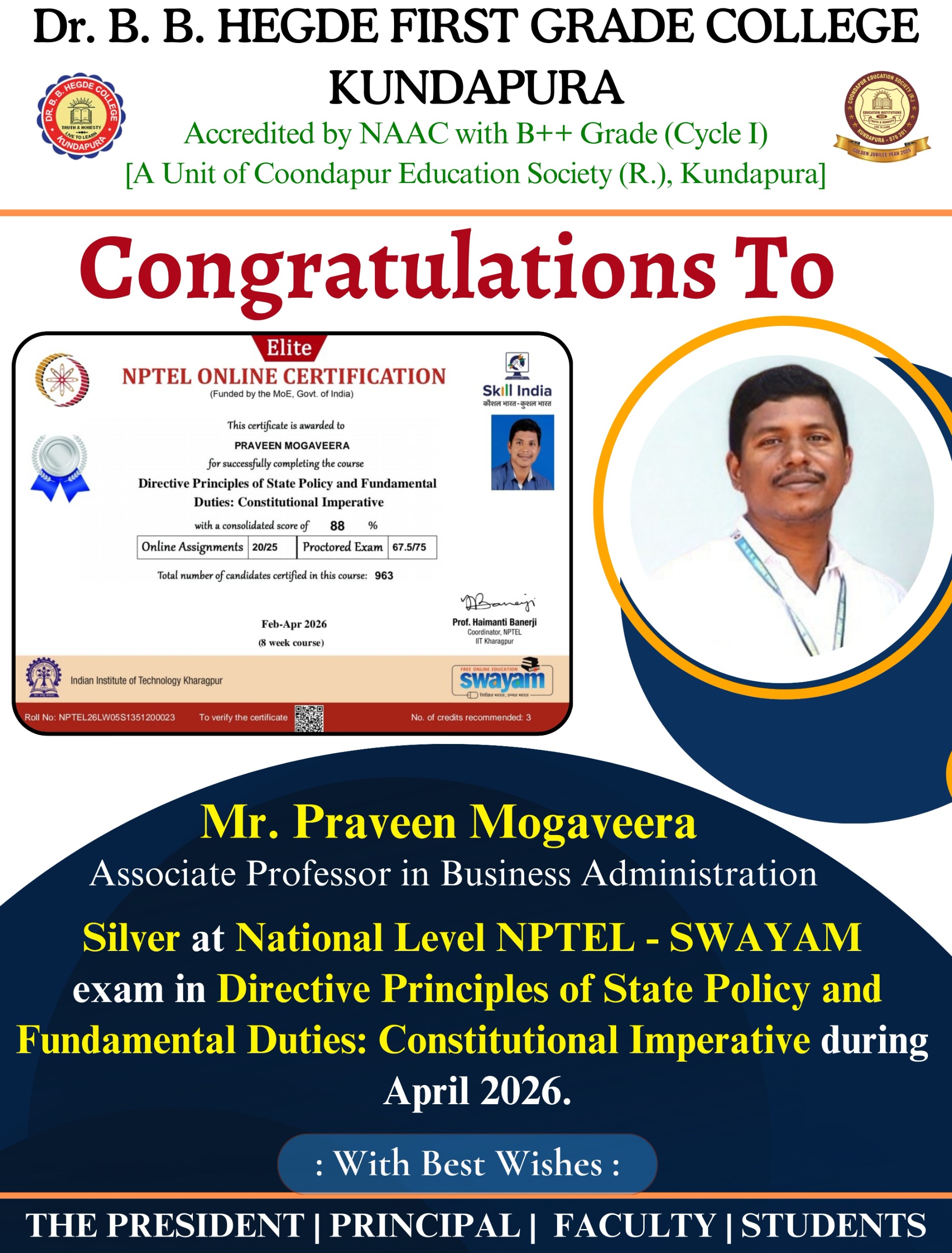
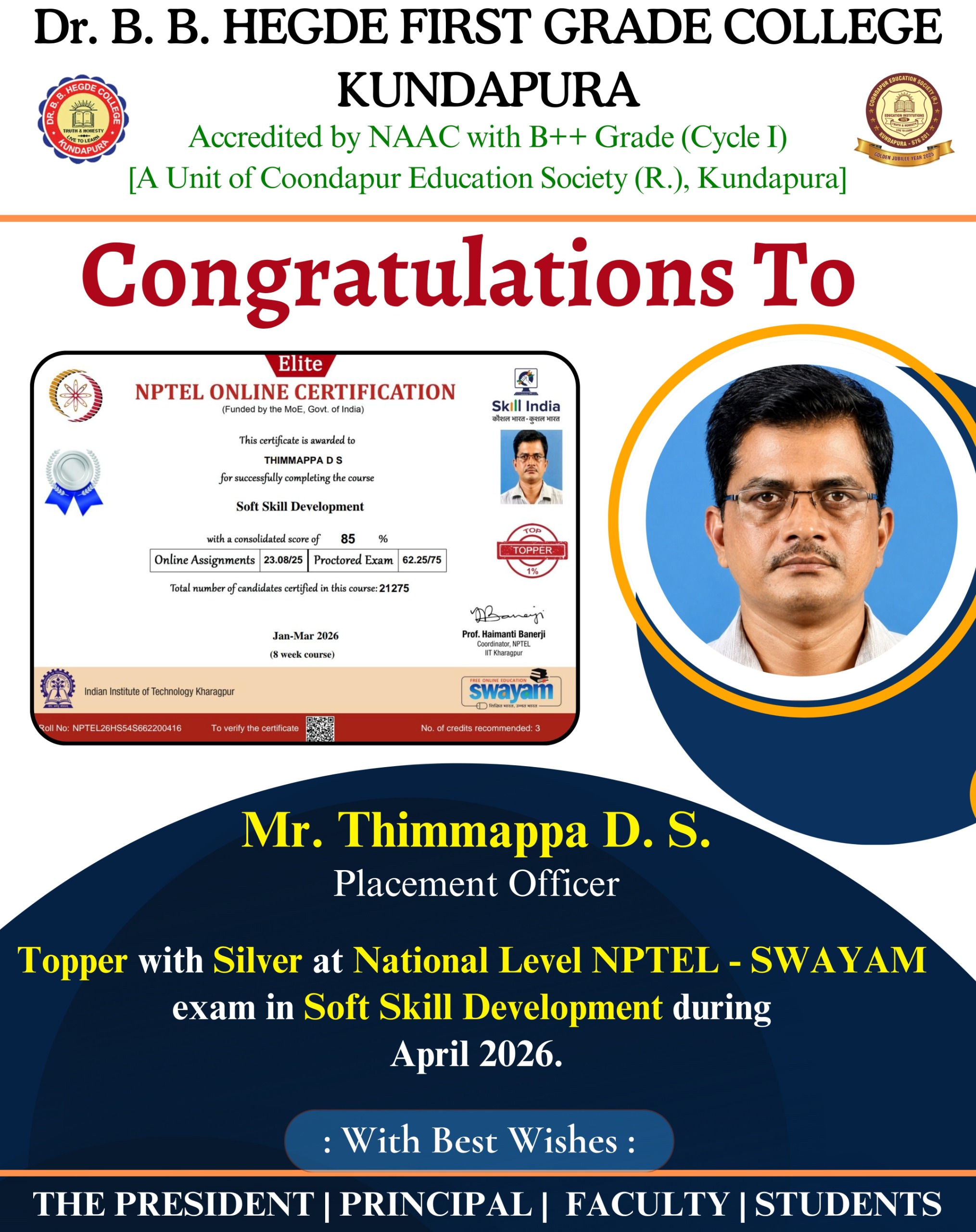
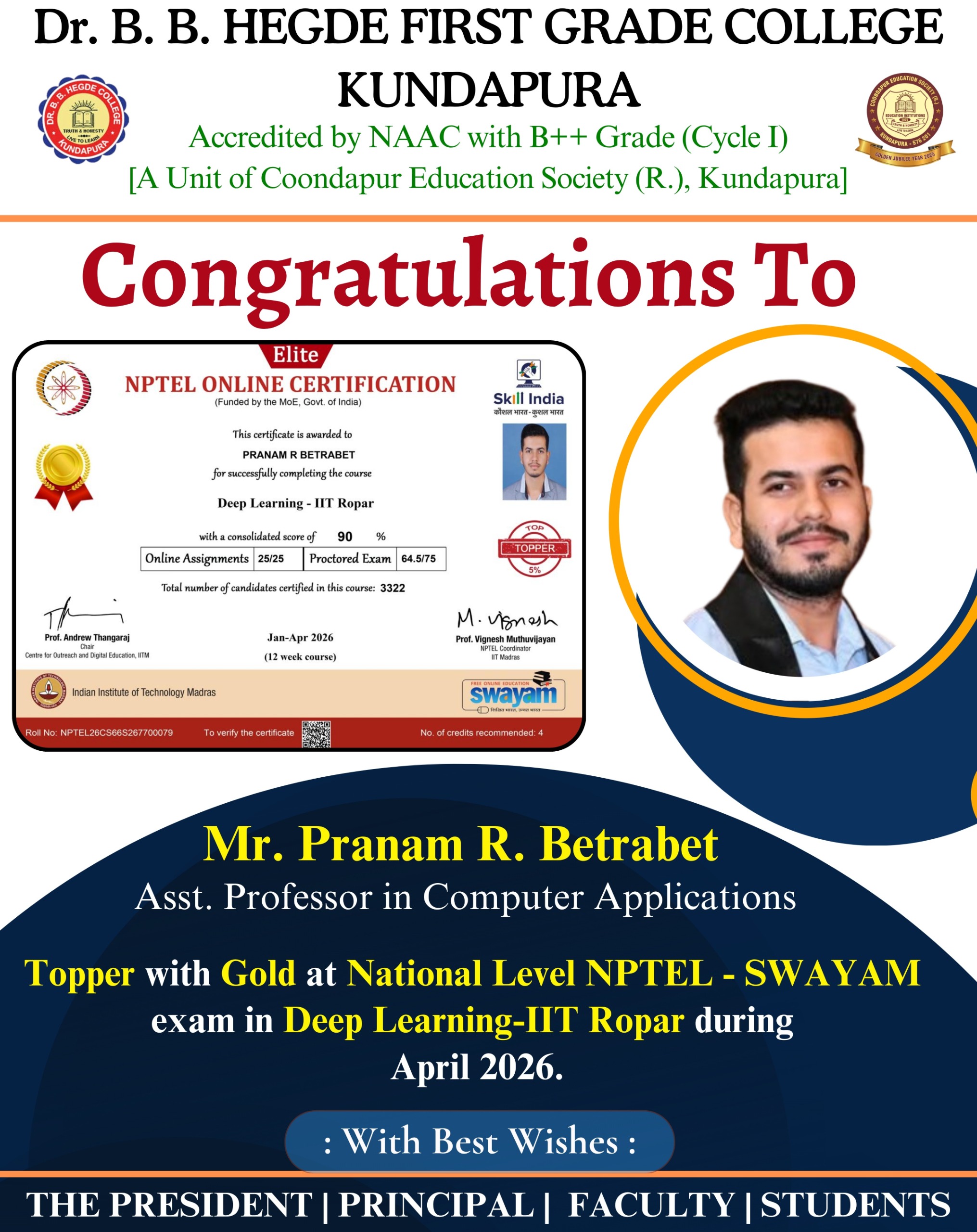
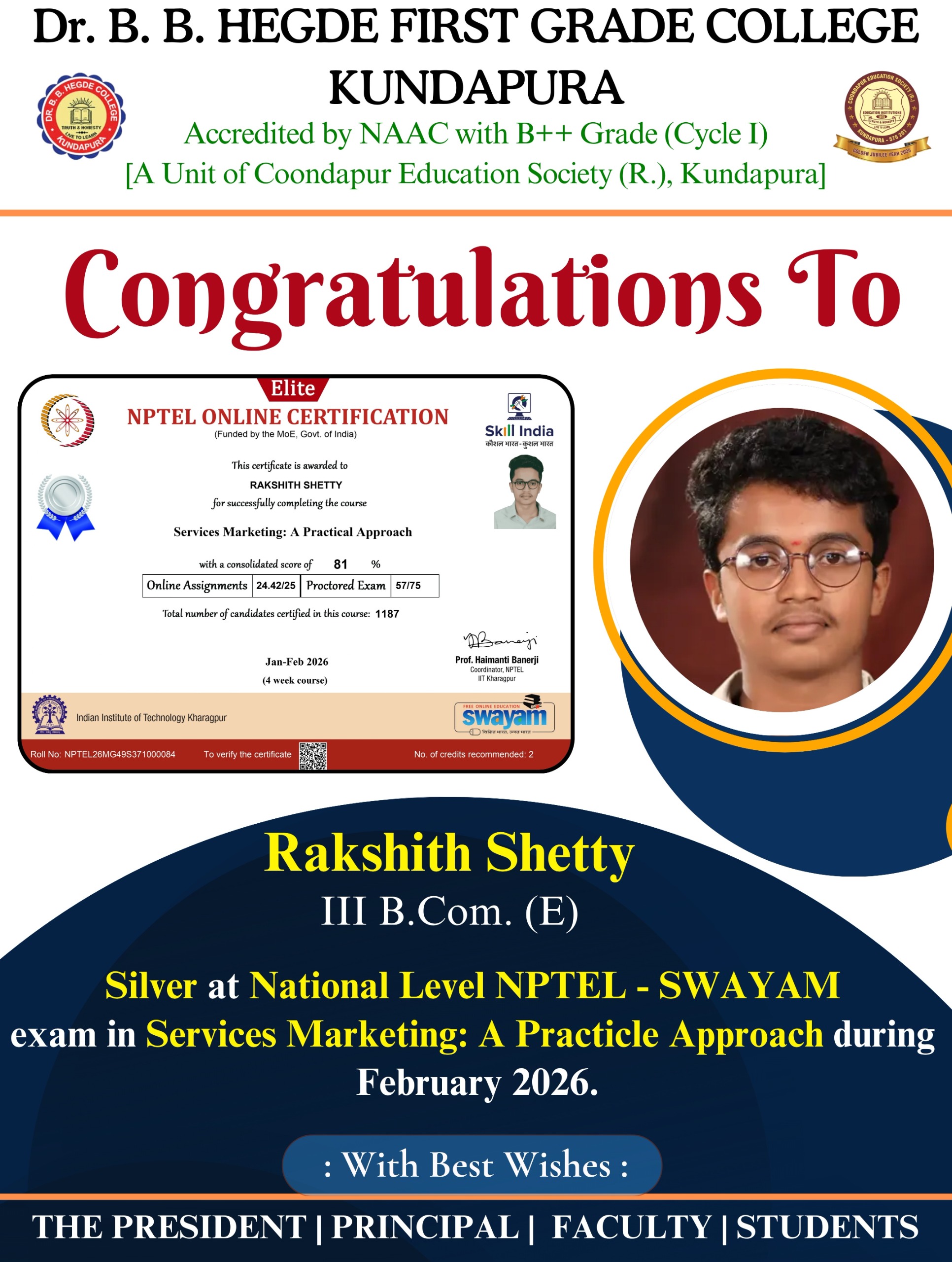
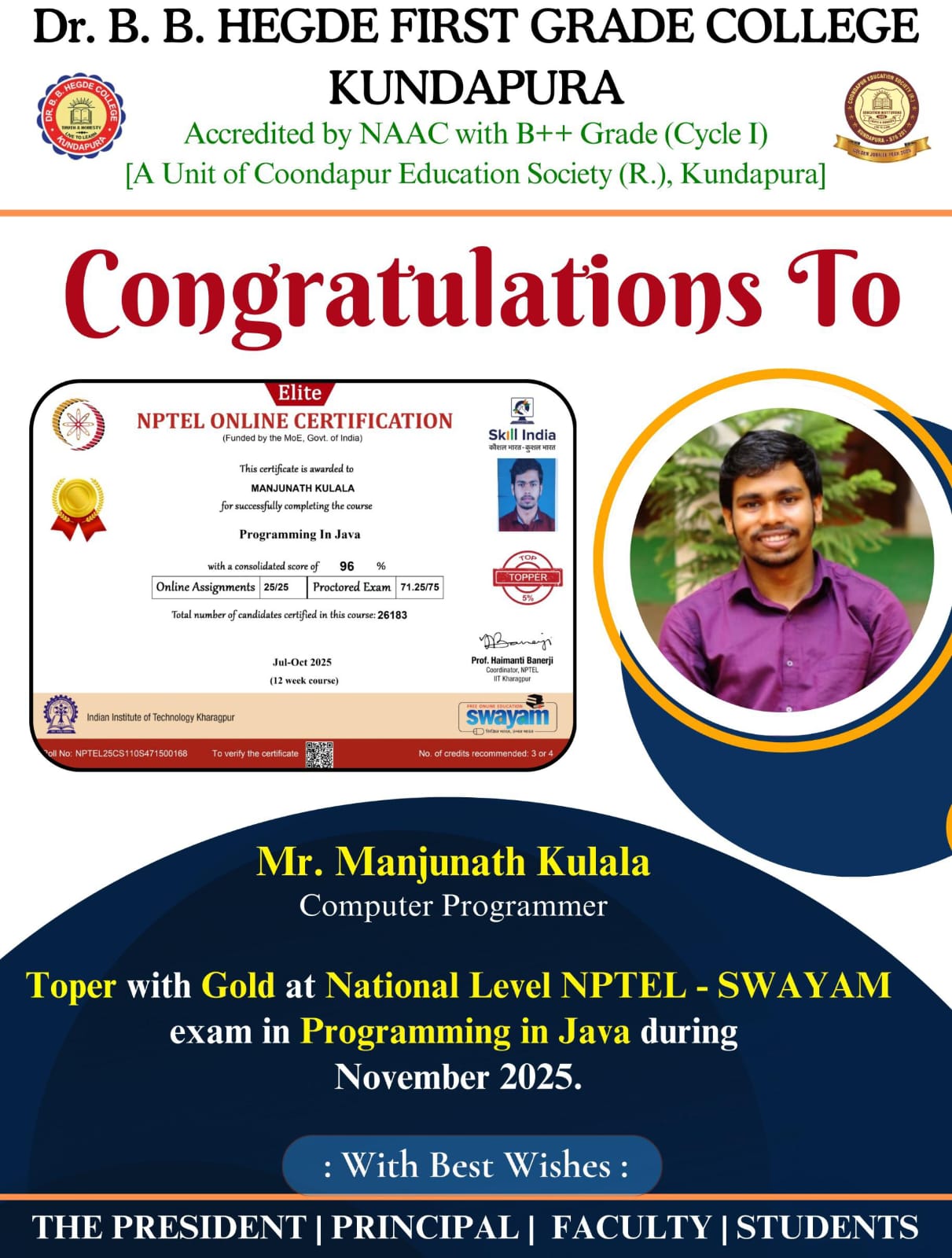
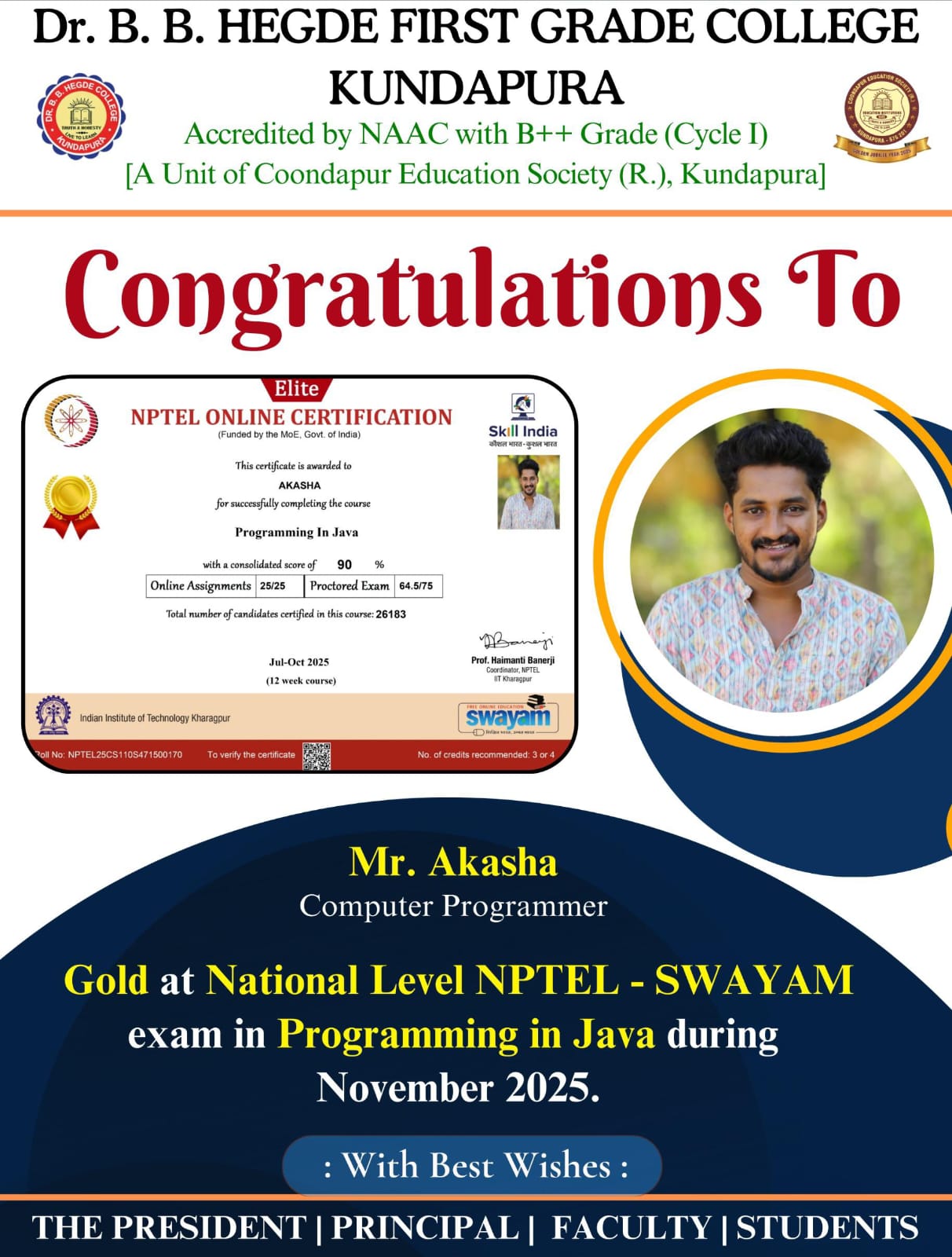
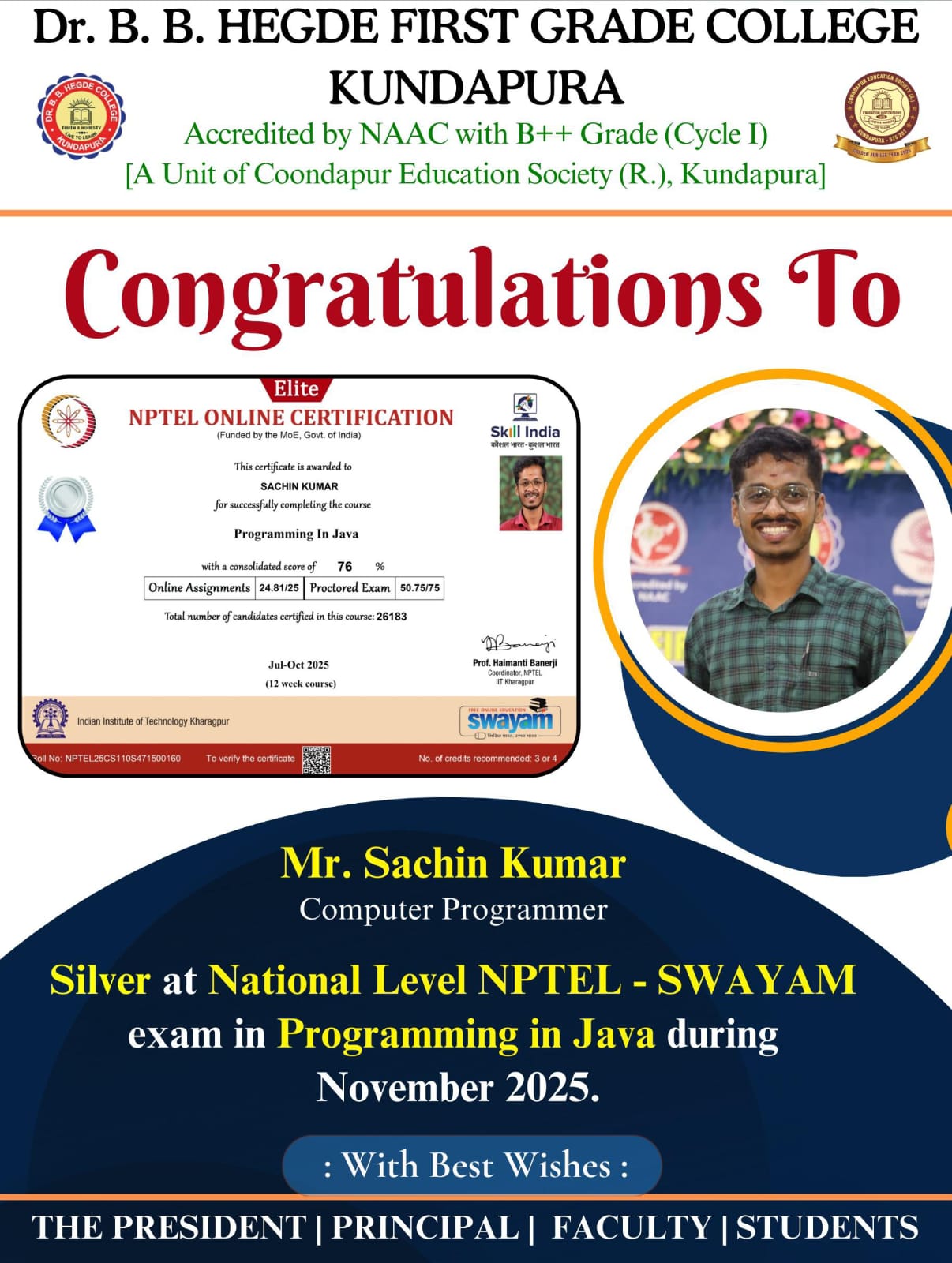
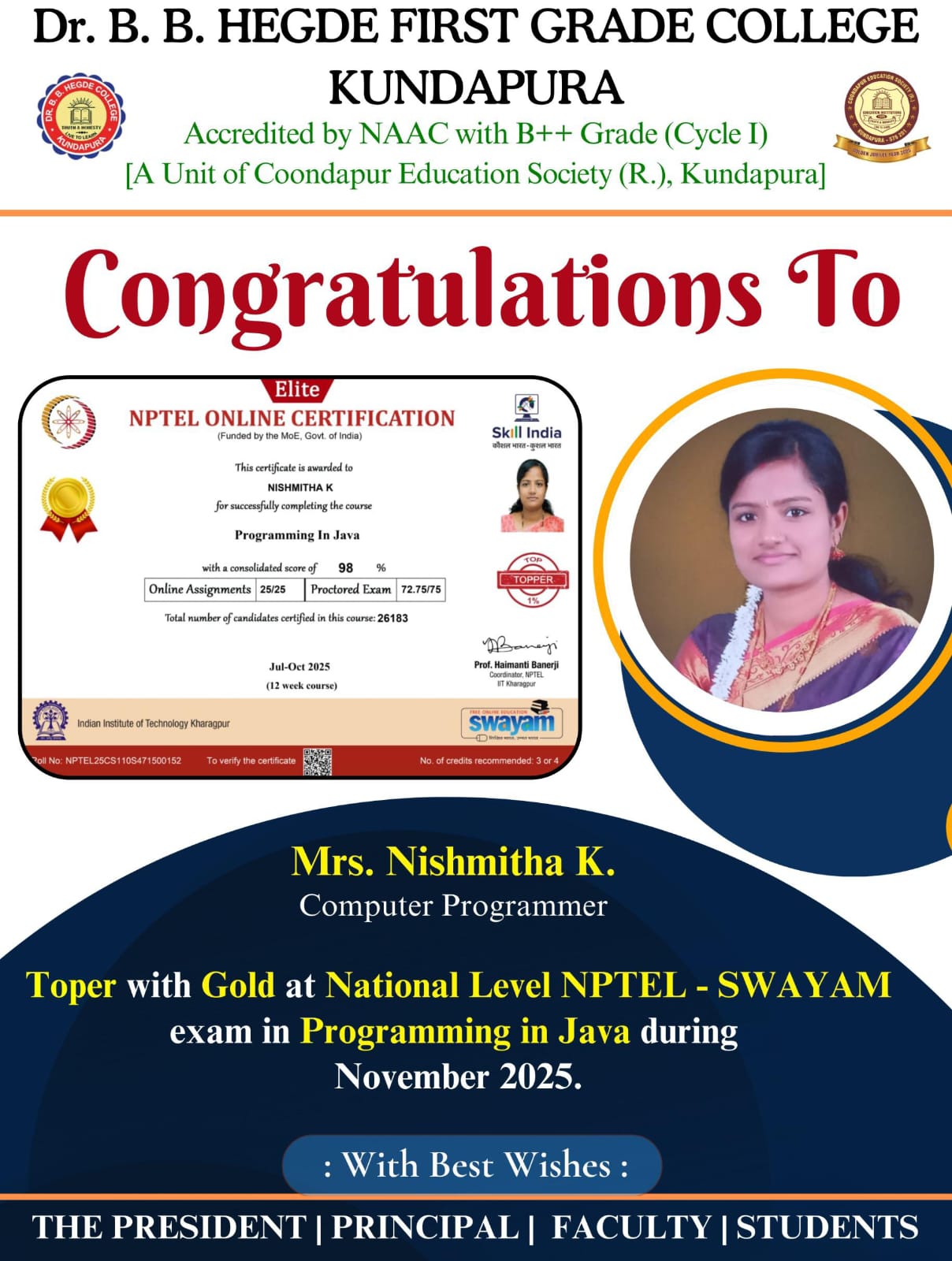
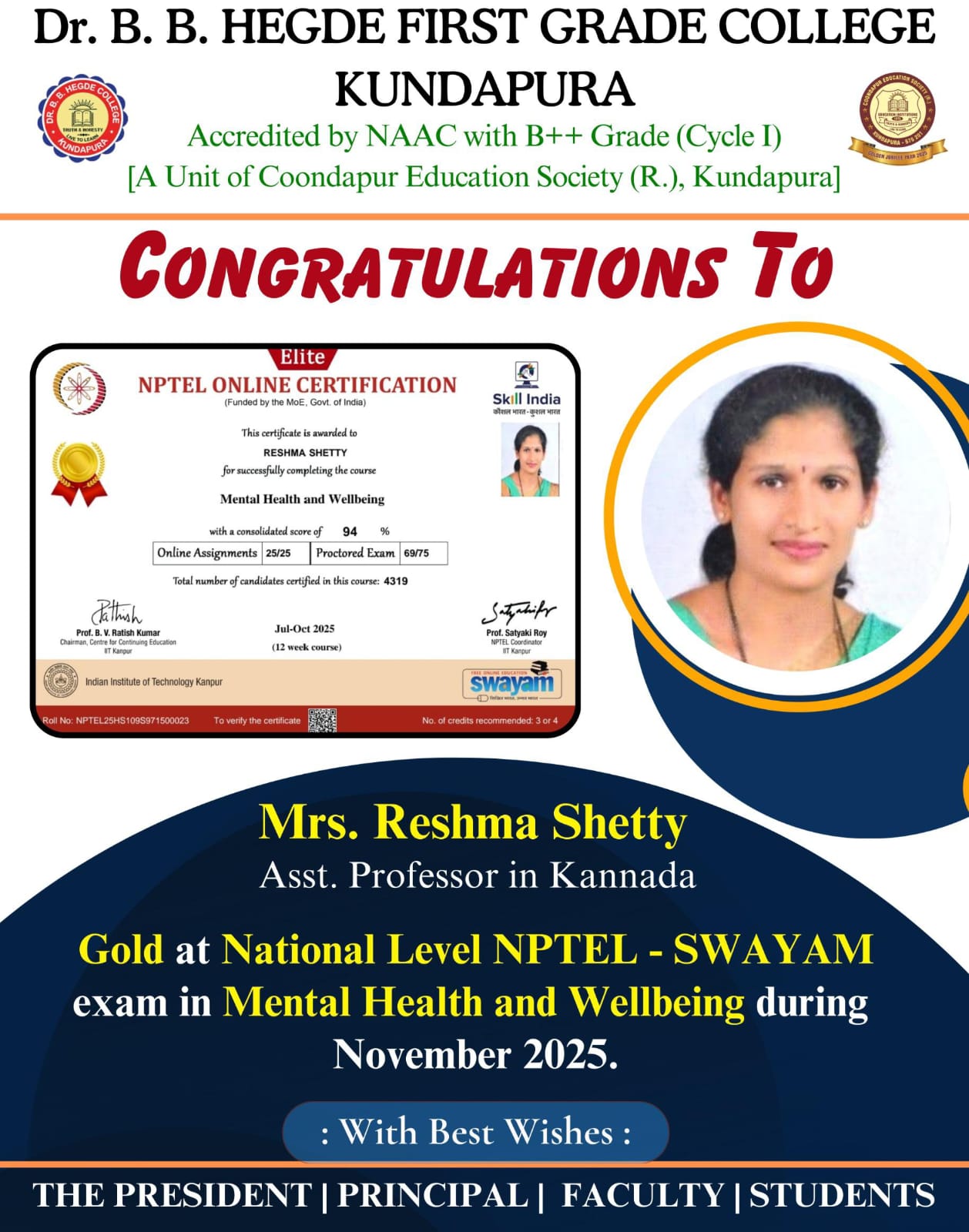
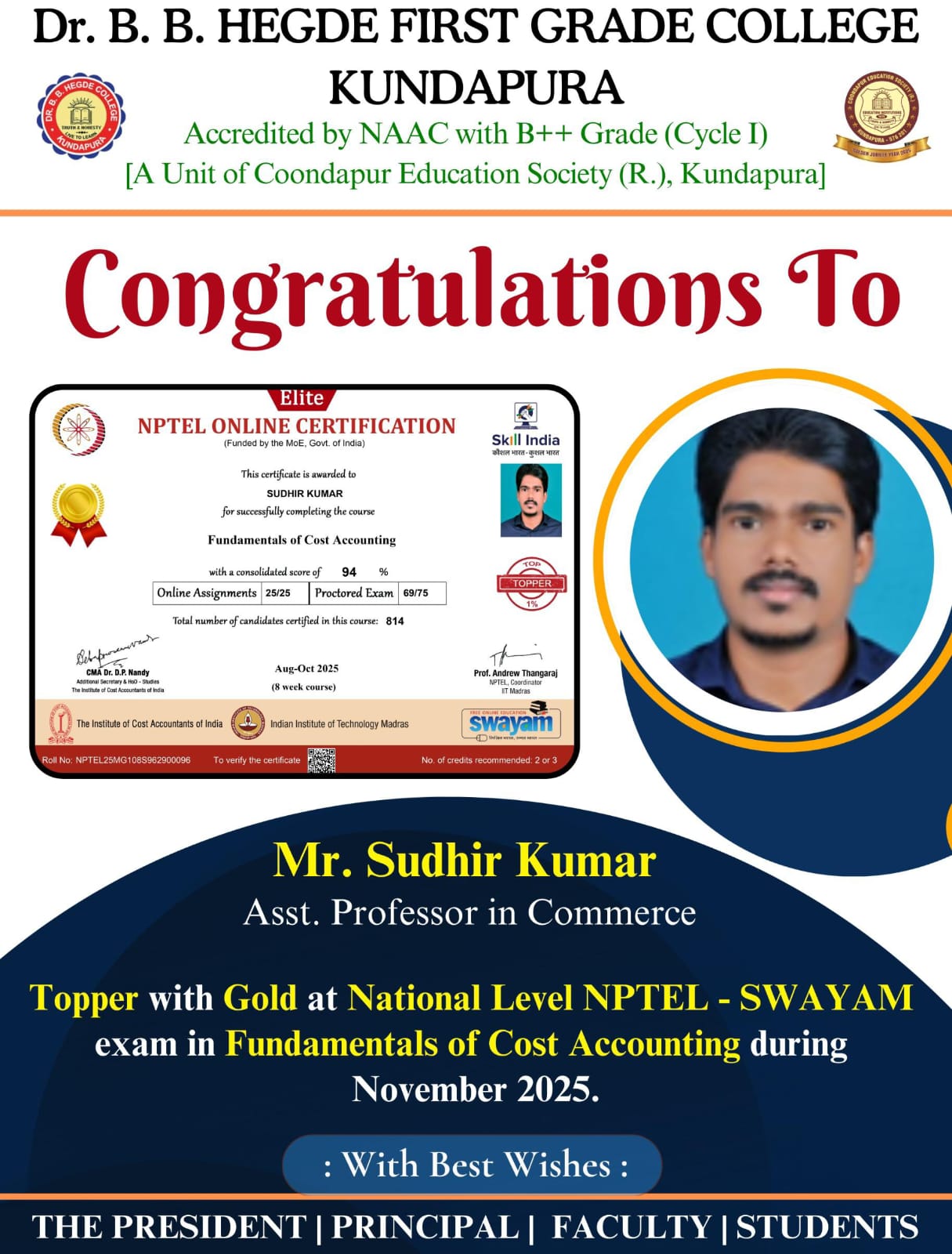
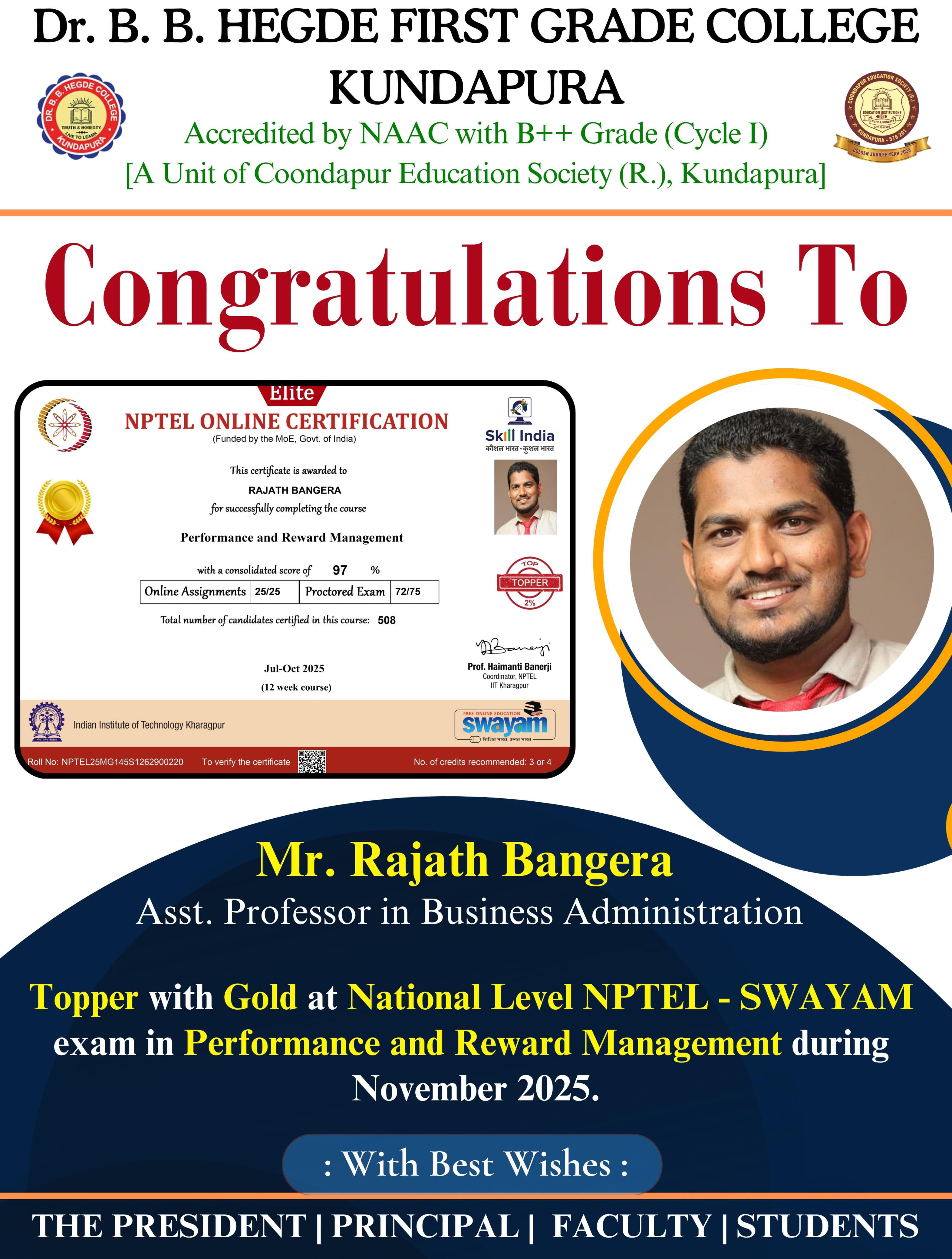
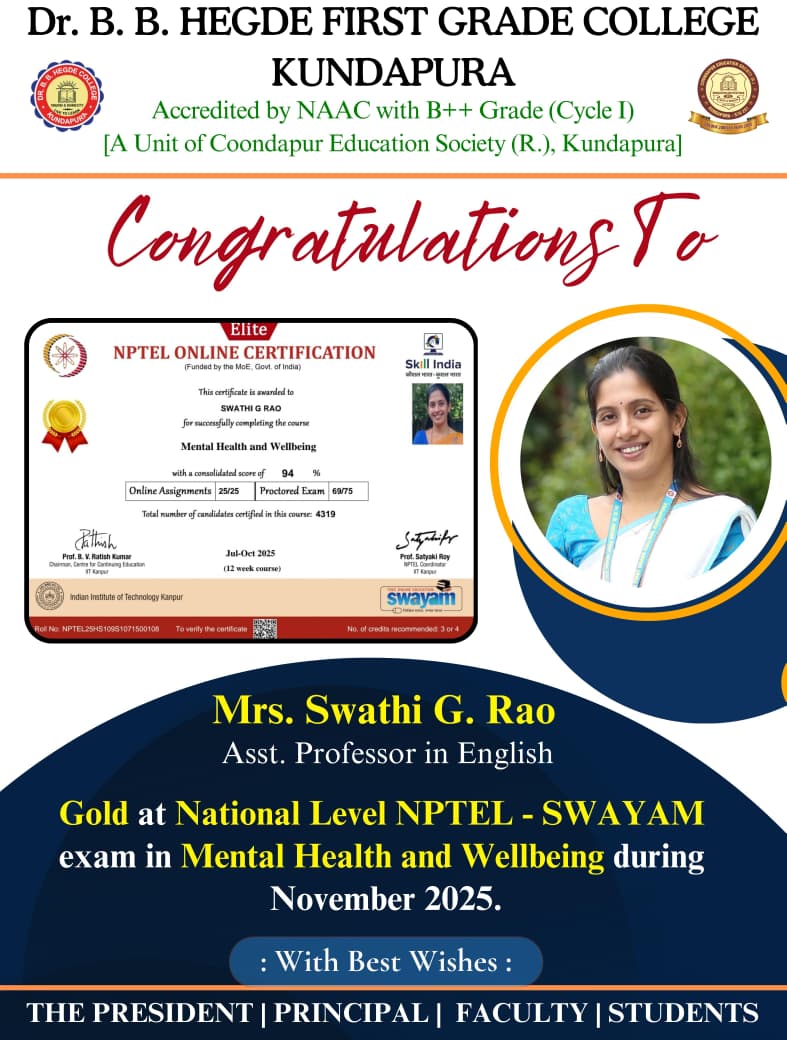
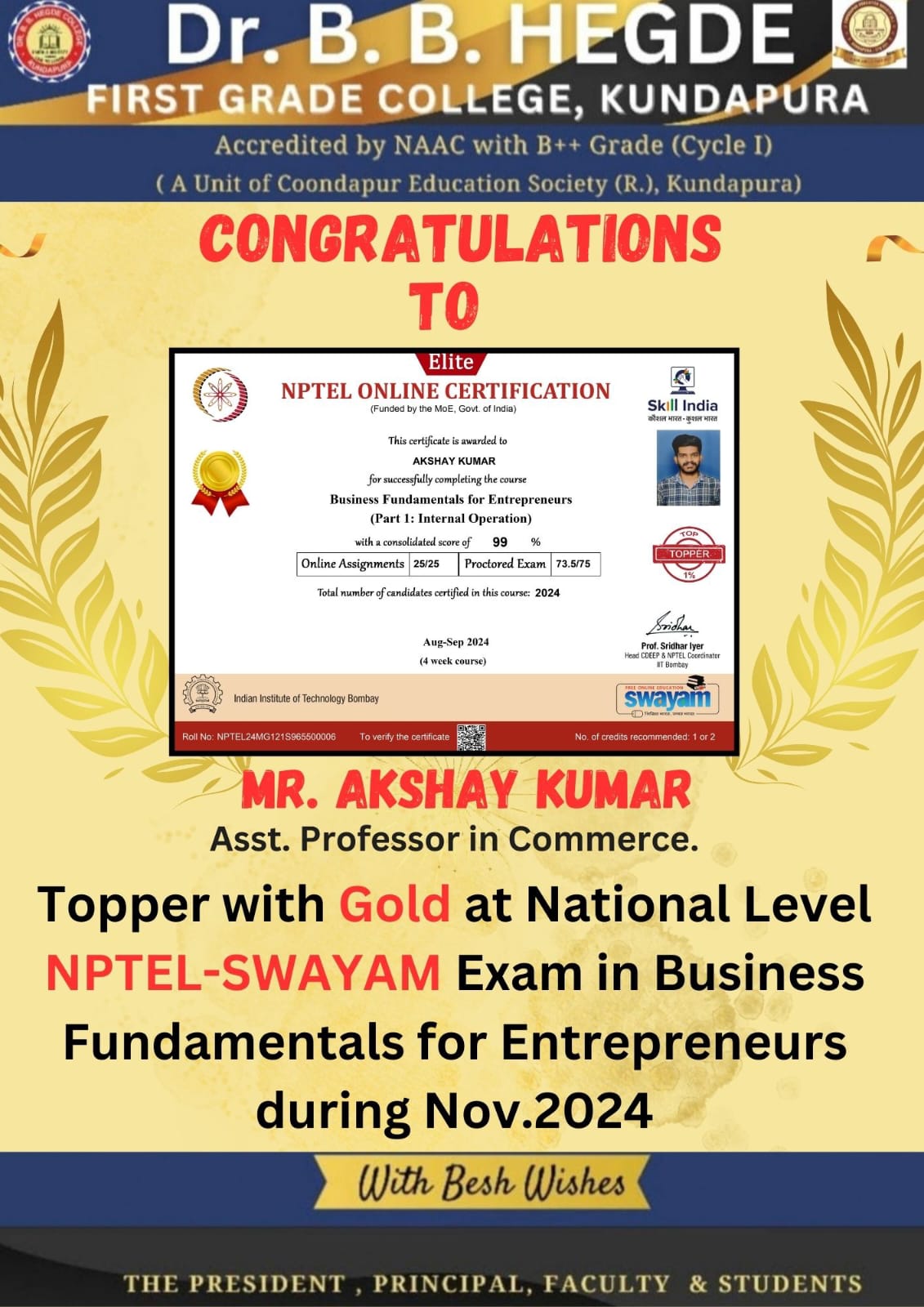
If the learner matches the pass criteria (see the next section), he/she is eligible for the e-copy of the course certificate which displays the name, roll number, photo, assignment marks, exam marks and total marks of the candidate.
The e-certificate will have the signatures of the NPTEL coordinator, the Head of the Centre for Education in the corresponding institute to which the Course instructor belongs along with the logo of the institute.
The e-certificate also carries the QR code, on scanning which, the original certificate hosted on NPTEL server will be accessible. This way any one presented with the e-copy can verify against the original.
Hard copies of the certificates can be printed by the learner on downloading the e-copy of the certificate.
Pass criteria
The weekly assignments are all graded out of 100 marks. For the 4/8/12 week courses, normally best 3/6/8 assignments are considered for calculating the Average assignment score (out of 100).
Final score = 25% of Average assignment score (out of 100) + 75% of proctored certification exam score (out of 100)
Learner is said to be certified in the course and he/she will be eligible for the e-certificate IF Average assignment score >= 40/100
AND
Proctored certification exam score >= 40/100
For a few courses (particularly programming courses), this pattern of grading may be slightly different, though the broad guideline and split will be the same as above. These will be announced during the course run and when final scores are published.
Use of SWAYAM-NPTEL courses for faculty members
NPTEL has an MOU with AICTE to have specific courses approved as FDP and contribute towards career progression points for the faculty. The modality is for faculty to enroll to these courses, write the exams and pass and then apply for the AICTE-NPTEL FDP certificate.
We have seen a large number of faculty enroll and learn from the courses on their own and also institutes encouraging them to do so. We recommend that institutes ask faculty members to complete at least one NPTEL course every semester, within their discipline or any other discipline. This will ensure continuous learning and updating of technical concepts, get an insight into the pedagogy of teaching the course, ideas on different types of assessment of the student, etc.
NPTEL also has courses on technology in education, teaching using learner-centric methods, on IP, Patent laws, Education system, etc. These can be recommended for new faculty recruits so that they understand the system.
Local Chapters
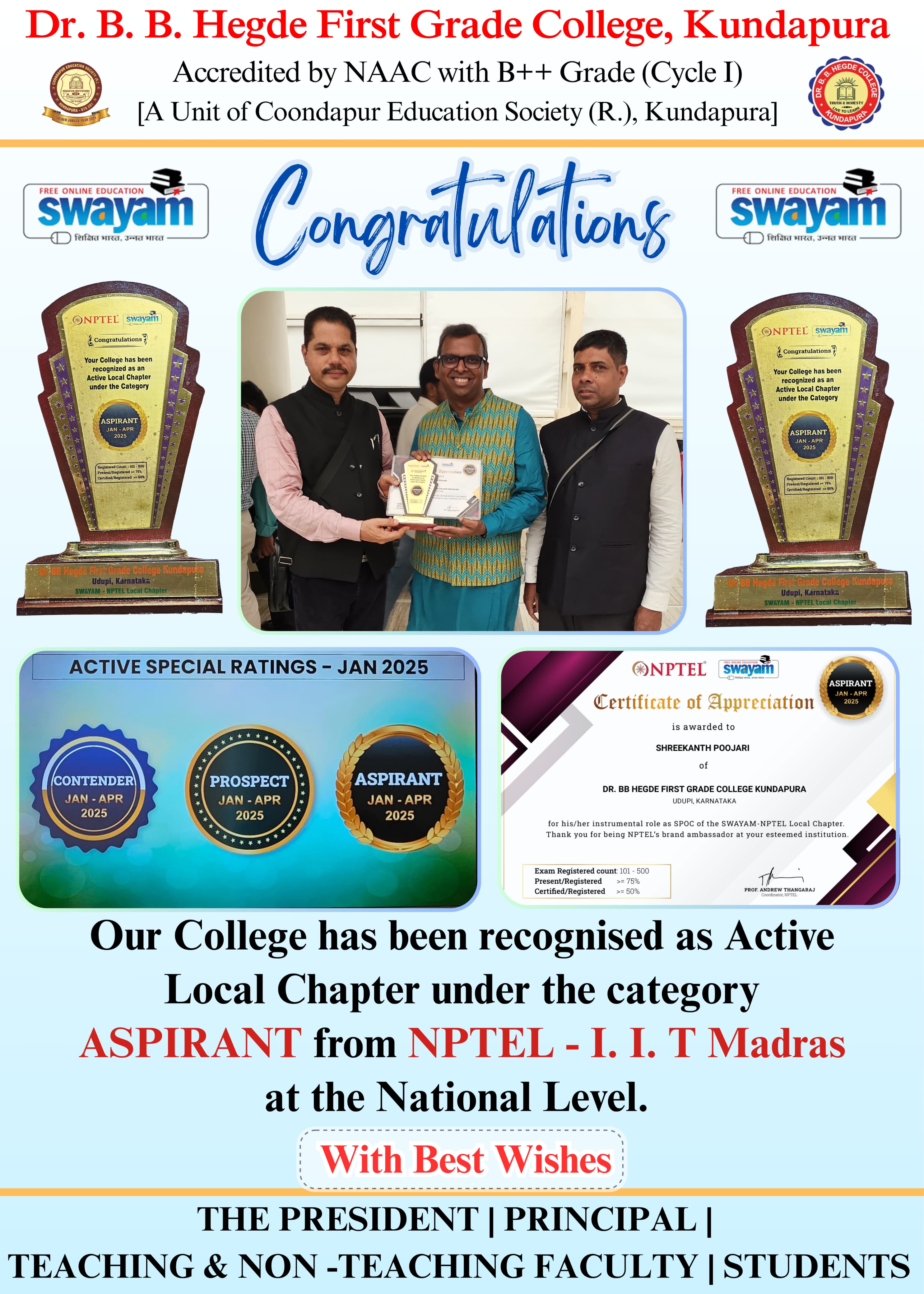
NPTEL is partnering with more than 2700 colleges across the country today, which include engineering, arts/science, polytechnic, management, pharmacy colleges and working with them in an organized manner to take the online courses to the learners there. There are no financials involved, with the only requirement being that a person be identified, who can serve as an interface between the college and NPTEL, and who is designated as the Single Point of Contact (SPOC).
The SPOC gets direct access to:
| Enrollment information course wise |
| Exam registration details |
| Hall tickets of learners from their college |
| Assignment and exam marks of candidates from their college |
| E-certificates |
The above information is directly shared from NPTEL with the SPOC through their login and can be used towards crediting the courses as per the decided norms.
In addition, the SPOC can nominate a mentor faculty from the college to help students in better understanding the content. For this, both the mentor and mentee student need to be enrolled in the course and the students have to select the mentor from the online course portal. The mentor will be able to see the progress of the student real time and can blend face-to-face instruction to supplement the online learning. The SPOC and Mentors for specific courses can also facilitate the learning by arranging for computer time, internet facility and help in understanding the content better.